The purpose of the Journal is to disseminate knowledge, experience, and best practice in engineering & manufacturing. The articles are written by practicing professionals in the Engineering City (EC). They cover issues relevant to their projects, operations, and organizations. The articles address the challenges of the time. As such, the Journal is also a chronicle of the evolution of the EC, its companies, and its individuals. It is the aim of the Journal to advance the engineering & manufacturing practice, to enrich the engineering & manufacturing community, and to contribute to the worldwide discourse in engineering & manufacturing.
Published by the Engineering Association
The Engineering City JournalIssue 2/2024Published by the Engineering AssociationYerevan, January 22, 2024
Andranik Meliqsetyan in his extensive article “Art & Engineering Initiative Announcement” is proposing to start a group of enthusiasts that will further investigate the intersection between Art & Engineering. He goes as far as envisioning an “Art & Engineering Gallery” in the EC. At the end of the article, he lays out a concrete plan of action with topics and deadlines.
He starts the article with a philosophical introduction – the coming together of the logical & rational on one side, and the creative & emotional on the other. He argues that this augmentation of the engineering mindset with an artistic dimension will result to deeper, richer, and more holistic engineering solutions.
This is a call to all art enthusiasts to join this group.
Management Corner
Products as a Stakeholder
by Rama, EA
Would like to revisit the stakeholder triangle. Most of the time we use the following triangle:
But I think that the products deserve to be on this triangle. Especially that our creative work is targeted to creating products, and continuously improving them and innovating on them. In other words, products, when treated as something that have their own S-curves (see picture below), acquire a personality, and hence an interest, that must be continuously served.
Pic.Continuous Improvement & Innovation of a Product
And we get the following triangle:
Where does this leave the “Community”? I think that it is better to use the “Community” as a base for the triangle – a base from where everything else grows – individuals and organizations, and thus must be always cultivated as a base. And we get the following triangle with its solid base.
In this triangle, the story goes like this: We exists because of our customers, so they are at the heart of the triangle. We serve the customers through our products, so the product is the top arrow of the triangle. To serve our customers we must have great individuals that form the organization. Thus, the Individuals and the Organization are the fundament of the triangle that is in immediate touch with the Community. And finally, the individuals and organization come out and feed off of the Community, which is the ground on which the triangle rests.
Management Corner
The Rights of Breaking the Rules
by Rama, EA
The child as he starts drawing, he will draw in a chaotic way (the 1st S-curve in the picture). Later he will go to a drawing school where he will learn all the rules of drawing (the 2nd curve). And finally, as he graduates from the drawing academy he has the right to draw as he wishes. Often the drawings will be chaotic, but with the knowledge of order (the 3rd curve).
It should be noted that the second curve is a very long one as the person must study and practice all the rules of drawing for a very long time. Only having shown that he has mastered these rules will people consider his chaotic drawings as art. If you go to the Picasso Museum, you will see first his classical drawings (2nd curve paintings) before seeing his abstract work (3rd curve).
You could say the same about a person joining a company. In the beginning, his work will be chaotic as he does not understand how things work and why they work the way they work. This is the first S-curve. Then he learns the procedures and processes and follows them as they are (the 2nd curve). He must stay on the 2nd curve for a long time. But then, the 3rd S-curve comes. This is the combination of the first two – chaos, yet with the knowledge of the rules and order. Here innovation can take place, here creativity and innovation can take place. Note that he cannot get to the third curve not having gone through the second. On the 3rd curve people introduce chaos again, but this is conscious chaos – a chaos that knows what the rules are. This chaos is positive chaos as it is innovation that will take us to another set of S-curves.
Here is another example – the process of pricing a project. In the beginning, the company does not know how to price. Its pricing is chaotic and does not follow any solid rule, yet they price quite quickly (1st curve). Soon they realize that they are losing money or not making enough money, so they get into devising a strict set of rules to follow (2nd curve). Then, they realize that if they follow the rules, it is taking them too much time to calculate the price, so they start calculate price with a rule of thumb (3rd curve). The “Rule of Thumb” is really nothing but a chaotic calculation of someone who has gone through the 2nd curve and has gained solid experience.
The first moral of the story is that you can start bending the rules only after knowing the rules. And you can know the rules only if you have practiced them for a decent amount of time.
The second moral of the story is that the rules must be eventually bent. Why? Because broken rules mean two things – it means expertise and creativity on one hand, but it also means the entry into a new set of S-curve triad, which is a major shift forward.
Equipment, Machinery, Tools Corner
Convenient Tools for Electronic PCB Debugging
by Valentin Mikheev, Engineering House
1. PCB Holder: Very convenient for soldering, inspection, and handsfree measurements.
2. Pocket-Sized Thermal Camera. Very convenient to very quickly detect short circuits (короткие замыкания) on your PCB.
Arts & Engineering Corner
Art & Engineering Initiative Announcement
by Andranik Meliqsetyan, NIY
Introduction
Art & Engineering, it’s a topic that we are exploring continuously at EC to understand the role of Art in Engineering and how engineers, engineering organizations and finally the engineering city can benefit from it. Over last few years we brought this topic to Armenian Engineering Weeks (AEW) several times to panel discussions in various formats involving professionals from different fields. Last year’s AEW was particularly richh with Art & Engineering exploration attempts. We had panel discussion during the first day but most prominent was the Art & Engineering expo at the lecture hall installed by Cylnad Media Art Lab. The works that we saw there been a combination of Art and Engineering in practice. The 2023 AEW expo brought us closer to our passion driven mission of understanding Art & Engineering.
To build up on this momentum we gained at 2023 AEW and move closer to solving the puzzle of Art & Engineering the logic and passion tells us that we need to get completely immersed in the process of creating the Art & Engineering work, the plan is to have a joint project with Artists from Cyland Media Art Lab and during 2024 develop an art installation which we can showcase during the AEW 2024.
Imagine, us engineers who design and build sophisticated systems, intended to serve a well-documented purpose with reliability, working with Artist who create dreams and visions, that may have no purpose except to be an expression of something to be admired and enjoyed. These two fields feel very distinct, but they have plenty of interconnections.
And now try to Imagine this two distinct but interconnected fields blended in a 2024 project with Cyland. That’s the interception that we wanted to understand over these few years going back and forth and we still need to, the AEW 2023 was light in the end of tunnel of exploration of essentials, now we need to enter another tunnel for solidifying and finally trying to solve the puzzle of Art & Engineering.
Definition of Art & Engineering
As Engineers we know very well the definition of Engineering, the key aspects of engineering that involves various disciplines. Art also has various forms and movements; Art is the product of its time and Art is continuously evolving as time goes by and the same is true for Engineering.
Ancient Greek philosopher Plato famously described art to imitate the objects and events of ordinary life. According to his view, a work of art is copy of a copy, and therefore twice removed from reality or truth. To immerse yourself in the topic of what Art is I recommend a book by Arthur Danto called “What Art Is”.
The history of art is vast and has a complex history, spanning thousands of years starting from the earliest known artworks, that are cave paintings, rock carvings going all the way through Prehistoric times to Contemporary Art at present times. Certainly, the Renaissance (14th 17th century) was a turning point in artistic developments. Artists like Leonardo da Vinci created Art heavily based on craftsmanship and engineering. Leonardo da Vinci’s biography is a great source of information on trying to understand the evaluation of art and engineering. He started his apprenticeship in the studio of the Florentine artist Adnrea del Verrocchio. He had been admitted there at the age of fourteen because of the remarkable quality of his drawings. Verrocchio instructed his apprentices in all the capabilities that were necessary to produce the work of his studio – engineering, mechanics, chemistry, and metallurgy. His background in all these fields later helped him to innovate some special techniques in paintings, architecture, sculpting and other scientific subjects, for which he is still so famous to these days and will continue to be in the future. To me this is a perfect example of Art and Engineering blending together and there are so many examples from ancient times to nowadays. All these stories have one thing in common, the right blend of Art and Engineering.
Art & Engineering: Distinct Yet Interconnected
Art & Engineering are often understood as very different fields; however, they are deeply interconnected. From the first look we only see that Art is focused on creativity, aesthetics and emotional expression which eventually enriches the human experience and on the opposite side when person thinks about engineering, they imagine that engineering focuses on applying scientific and mathematical principles to design and build structures, machines, and systems and that’s a right assumption. However, if you ever look closely at the working processes of artistes, you will immediately understand that they are heavily using principles from various Engineering disciplines, mathematics, and sciences. And the same is true for Engineering, engineers from various disciplines mastered Art a long time ago, the evidence of that is highly visible in Architectural constructions from various timelines of human history, when looking on those building you see a carful balance of Art presence in the form of aesthetics and engineering holding all together with structural designs that holds that building for many generations. The blend of Art and Engineering allowed ancient architects to design and build architectural wonders that have been standing for many generations.
Where Art & Engineering Meet
Well certainly Art and Engineering have many intersections they meet in various fields and disciplines, especially nowadays when technology skyrocketed many artists found their inspiration in Engineering and started new Art movements. Nowadays, engineering tools are available, they are inexpensive, and the learning curve is relatively fast with all online education. So, more and more artists are starting to use engineering tech for art projects, sometimes you see too much tech used in art as well, which might no longer be considered as art. So, with tech advancements and availability the intersection of art feels to be mixed, you see artist using tech here and there not fully understanding what they are using, and that’s an issue that should be solved with the right blend of art and engineering. Historically, Art and Engineering had several meeting points, or let’s call those shared elements, Creativity, Design, Problem Solving, Inspiration, combining aesthetic with functionality and innovation.
Impact of Art & Engineering
Let’s talk about the impact of Art & Engineering blend on individual engineers, engineering organizations and Engineering City in our case.
Obviously, the impact of Art & Engineering on engineers and engineering organizations can be different and unpredictable due to the diverse nature of humans. However, after doing some reading, I selected the most comment impacts that had been observed over the generations on the people and organizations who have been actively involved in both art and engineering.
Harmony of Logic and Emotion:
Art and engineering represent the confluence of logic & emotion, rationality & creativity. For engineers, engaging with art is a reminder that true innovation often arises from balancing the analytical mind with emotional intelligence and intuition. Also, for enginees as well as for engineering leaders this point is important from decision making point of view. Decisions influenced by both logic and emotion are often balanced and holistic. While logic provides a solid foundation based on facts and data, emotion adds a layer of empathy, ethics, and human centered considerations. This combination is crucial for people who are involved in product design, team leadership, organization leadership etc.
Improved Communication:
Artistic skills can enhance an engineer's ability to communicate complex ideas visually and effectively. You might be brilliant engineer silently but surely contributing your skills in an organization or in startup idea but if you don’t have well established communication skills that can convey your idea as local explanation as well as on a big picture level, your talent might stay annotated, or misunderstood. For engineering, effective communication is fundamental for successful collaboration. It ensures that all team members and customers are on the same page, understanding their roles, and are aware of project goals. This clarity reduces confusion and facilitates smoother teamwork, leading to more efficient and successful outcomes.
Innovation Through Diverse Perspectives:
Exposure to art can stimulate creative thinking and help engineers approach problems from innovative angles. Diverse Perspectives bring together different ways of thinking, problem solving, and creative thinking. This combination can lead to more innovative solutions as different experiences and backgrounds often lead to unique insights and ideas. A team or organization that embraces diverse perspectives is generally more adaptable and resilient. Such groups can more easily adjust to changes and disruptions, as they are not limited to a single way of thinking or doing things.
Increased Public Engagement:
Artistic elements in engineering projects can make them more accessible and engaging to the public. Increased public engagement also can lead to enhanced community involvement, improved decision-making, increased transparency and trust, better product development, enhanced educational outcomes, innovation, responsiveness to community needs, cultural and social enrichment.
Personal Satisfaction and Fulfillment:
Exposure to artistic thinking can inspire engineers to think outside conventional boundaries, leading to more innovative solutions. It’s also about feeling good about what you're doing in life, whether it's in your career, or hobbies. This sense of fulfillment often comes from doing things that align with your personal values, interests, and ambitions. When you feel personally satisfied and fulfilled, you're generally happier, more motivated, and have a positive outlook on life.
To summarize: the impact of combining art and engineering is powerful and wide-reaching. Art brings creativity, beauty, and emotional expression, while engineering focuses on solving problems, building things, and practicality. One of the central purpose of this Art & Engineering initiative proposes is to unlock the mechanism of blending these abilities. Obviously, people who will have direct involvement in the initiative moving forward will have time to learn and absorb these values and may others, it’s also obvious that not a lot of people will be interested in spending time or maybe they are interested but not able to and that’s ok. The key is to have a group of people who are passionate about this, and things will move slowly but surely and over time it will snowball to something that will become part of our mindset and community.
Impact of Art & Engineering for EC
We have already discussed the impact of Art & Engineering on engineers and engineering organizations, and I would like to share thoughts on the importance of Art and Engineering for our Engineering City. Having a team of people who are passionate about Art and Engineering and can collaborate with Artists to design develop Art & Engineering installation and participate to various expos and eventually have dedicated art museum in EC, like the museums we have, would be one of a kind differentiator for EC. The beneficial impact of Art & Engineering should start from individual engineers, and it will be cascading up to critical mass in our case Engineering City hopefully in the future we will have room to cascade up to Factory City etc. But for now, imagine having all those people with impactful abilities concentrated in one place at Yerevan, Engineering City, Bagrevand 21/1 where we educate new generations, we design and develop world-class mission critical solutions for the world. That synergy will have unprecedented impact for many generations. And that’s what we need to create for ages to come.
Few thoughts below on larger scale impact of being in the Art & Engineering on EC level.
Harmony of Rational and Creative Thought:
The concept of "Harmony of Rational and Creative Thought" refers to the balanced integration of logical, analytical thinking (rational thought) with imaginative, innovative thinking (creative thought). It's like combining the clear, structured way of thinking that helps in solving math problems (rational thought) with the kind of thinking you use when drawing a picture or writing a story (creative thought). When these two ways of thinking work together, they can lead to better problem-solving, more effective decision-making, and greater innovation.
Manifestation of Human Potential:
"Manifestation of Human Potential" means making the most of what people are capable of. It's about helping individuals reach their full abilities and talents. This can involve learning new skills, gaining knowledge, and boosting creativity and problem-solving abilities. It's like unlocking all the best parts of a person so they can achieve great things in life, whether in their career, personal growth, or helping others. This concept is important because it believes everyone has hidden talents and strengths that can be developed to make their lives and the community around them better.
Exploration of Aesthetics in Functionality:
"Exploration of Aesthetics in Functionality" simply means finding the perfect balance between how good something looks and how well it works. It's about making sure that things are not only useful but also beautiful. This idea is important in designing everything from buildings and cars to everyday items like phones and furniture. It's like making a chair that is not only comfortable to sit in but also looks amazing in your room. The goal is to create things that are both practical and pleasing to the eyes.
Dialogue Between Order and Chaos:
"Dialogue Between Order and Chaos" refers to the balance or interaction between well-organized, predictable systems (order) and unpredictable, random elements (chaos). It's like having a conversation between two very different ways of looking at the world. In many areas of life, like in nature, art, and human behavior, there is a mix of both order and chaos. For example, in a piece of music, the order is the rhythm and melody that follow a pattern, while the chaos might be an unexpected change in tempo or key. This concept is important because it helps us understand that both stability and unpredictability are essential parts of life and can lead to creativity, growth, and change.
Ethical Considerations in Creation and Innovation:
"Ethical Considerations in Creation and Innovation" means thinking about what is right and wrong when making new things or coming up with new ideas. It's about being responsible and considering how these creations or innovations might affect people and the environment. For example, when someone invents a new technology, they should think about if it is safe, if it respects people's privacy, and if it is good for the environment. This is important because it helps make sure that new inventions and ideas help society and do not cause harm.
To summarize: the above statement can have very deep philosophical explanations, it’s up to you to dig deeper and explain it from your perspective as well. I hope you will enjoy this article and if you feel passionate about things that I brought up in this article it means you should be in this initiative to help move this forward. Sooner or later things will progress and snowball to something bigger, if even there are just handful of people involved.
Making this happen
With the passion of professional engineering projects, we will try to keep this initiative well scoped, initiative will be divided into various phases. The example is shown below. Working with artists will not be easy, they will represent the chaos we should represent the order the structural system level thinking. The result should be very diverse, to put in a perspective, result might be very sophisticated art & engineering installation like you saw during the AEW 2023, or it can be combination of tech and art in various forms, involving technology, art, painting, hand craft works, articles and even a study or a book. Ideally, we should have a superset of all together to be able to conduct the full-blown art & engineering expo.
This might sound too ambitious but we are skilled to do so, at least for core engineering portion, we need to bring up all side skills that we enjoy during our free time, this is a chance to bring your hobbies to other level that can be scaled in larger initiatives eventually leading to something bigger and valuable for others as well.
Project Objective:
Example: To create a public installation that encapsulates the challenges and triumphs of contemporary engineering and human endeavors.
Project Scope:
Design and construct an interactive art installation that conveys the contrast of current engineering challenges and the human experience.
The installation will serve as a beacon to highlight the importance of innovation, creativity, and emotional resonance in addressing today's global challenges.
Engage the EC in a dialogue about the role of engineering education, the impact of AI on the engineering profession, and the essence of creativity in problem-solving.
Phase 1: Research and Conceptualization (Duration: 4 weeks)
Assemble a diverse project team consisting of engineers, artists, industrial designers, and AI specialists.
Conduct workshops to identify key topics such as the decline of engineering education, AI's influence on engineering, and the balance between deadline-driven work and creativity etc.
Develop a concept for the installation that represents these themes.
Phase 2: POC/Design Development (Duration up to 6 weeks).
Phase 3: Engineering and Fabrication (Duration 8 weeks).
Phase 4: Testing, problem solving and iteration (Duration 4 weeks).
Phase 5: Installation and Launch (AEW 2024 at History Museum & EC)
Phase 6: Feedback and ongoing monitoring
Who can join the initiative
If you went so far reading all the way to this bullet, you should be curious who can be in an initiative team member? Well People from variety of backgrounds and skill sets can join the initiative, I wrote down some examples below to give you idea, and we really need this blend to be successful in this initiative. You also might ask yourself how much time I need to put in this? Well, we are all busy, we all have our responsibility, whether we are students or established professionals, involvement can be scaled with the level of interest you have and with the intention to not distract your daily duties.
Artists and Designers
Engineers (Mechanical, Electrical, Software, etc)
Scientists (Engineering, Space, Material, etc)
Project Managers
Marketing and Business Professionals
Educators and Researchers
Students
AI specialist
Industrial Designers
Team Leads, Managers, Directors
And anyone with passion for innovation and desire to blend creativity with functionality and an enthusiasm for exploring uncharted territories where art and engineering intersect.
If you are passionate about things that I brought up here reach out, we are going to start kicking this off as soon as possible.
EC News Corner
Hiking to Teghenis Mountain and Teghenyan’s Monastery
by Hrachya Pogosov, YEAE
EC News Corner
Nicolas Anelka visits the EC
Announcement Corner
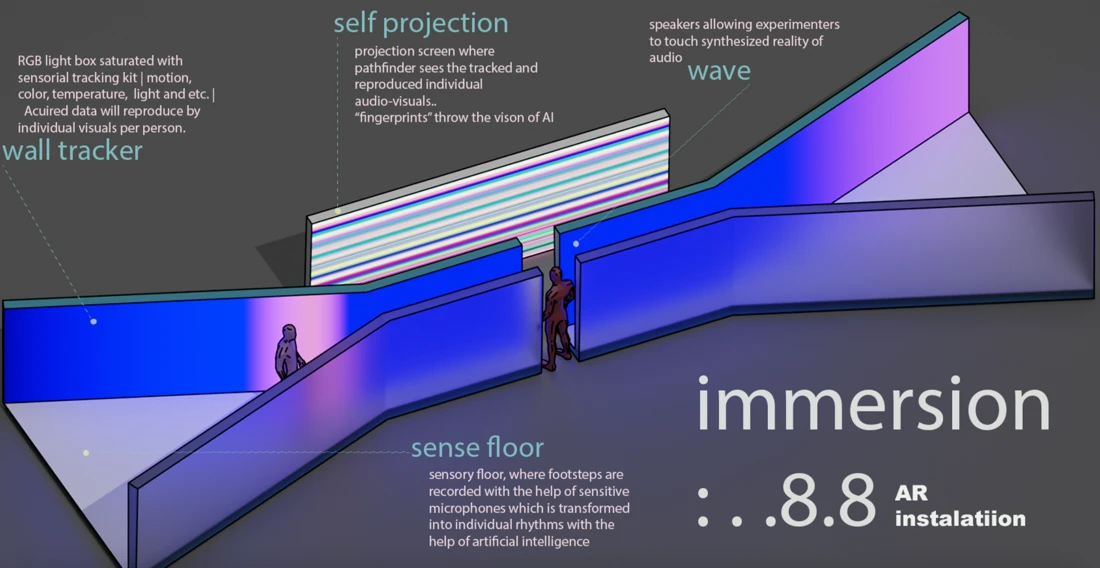
Immersion – A Presentation of an Art Concept, Tuesday, January 23
by Marina Minasyan, EIF
Հունվարի 23-ին ժամը 17:00-ին հրավիրում ենք ձեզ և ձեր ընկերության աշխատակիցներին Ինժեներական քաղաքի թանգարանի դահլիճ, որտեղ տեղի կունենա Գևորգ Գրիգորյանի կողմից «Immersion» նախագծի ներկայացում և միջդիսցիպլինար քննարկում՝ հիմք հանդիսանալով արվեստի, գիտության և տեխնոլոգիական ոլորտների հետագա համագործակցության համար։
«Nigrum Arca» կամ «Black Box» միջդիսցիպլինար ինկուբացիոն նախագիծն իրականացվում է ՁԻՀ Գյումրու Տեխնոլոգիական Կենտրոնի և “GALIQUE Art Space”-ի կողմից։ Նախագծի հիմքում ընկած է գիտության, արվեստի և տեխնոլոգիաների փոխհարաբերության և ոլորտային համագործակցության ուսումնասիրությունը, ինչպես նաև գործուն միջդիսցիպլինար համակարգեր ձևավորելու առաքելությունը։
Ութ շաբաթյա ինկուբացիոն ծրագրի շրջանակում ՁԻՀ/ԳՏԿ և “GALIQUE Art Space”-ի թիմերը աշխատում են ընտրված մուլտիմեդիա արվեստագետների, Ինժեներական քաղաքից ներգրավված ճարտարագետների և գիտական համայնքի ներկայացուցիչների հետ՝ մարդու հուզական և զգայական փորձառությունների ուսումնասիրության և դրանք ընկալելի և ժամանակակից դաշտ բերելու ուղղությամբ։
Նախագծերից մեկը՝ Գևորգ Գրիգորյանի «Immersion» նախագիծը մասնակիցներին տանում է զգայական ճանապարհորդության՝ ապահովելով հետաքրքիր փորձառություն բազմազգայական սարքերի միջոցով: Այս փորձառությունները այնուհետև արտապատկերվում են ֆիզիկական տարածքում։
Այս տարածության ներսում տարբեր սենսորներ ձայնագրում են այնպիսի տվյալներ, ինչպիսիք են ձայնը, ալիքի գույնը, ջերմաստիճանը և լույսը՝ դրանք արհեստական ինտելեկտի միջոցով փոխակերպելով առանձին ռիթմերի: Նախագծի նպատակն է բազմազգայական տվիչների միջոցով հավաքագրված տվյալները հանրագումարի բերել և մուտլիմեդիա տեխնոլոգիաների միջոցով հետազոտել տարբեր զգայարանների կապը։