The purpose of the Journal is to disseminate knowledge, experience, and best practice in engineering & manufacturing. The articles are written by practicing professionals in the Engineering City (EC). They cover issues relevant to their projects, operations, and organizations. The articles address the challenges of the time. As such, the Journal is also a chronicle of the evolution of the EC, its companies, and its individuals. It is the aim of the Journal to advance the engineering & manufacturing practice, to enrich the engineering & manufacturing community, and to contribute to the worldwide discourse in engineering & manufacturing.
Published by the Engineering Association
The Engineering City JournalIssue 9/2024Published by the Engineering AssociationYerevan, May 13, 2024
This edition is fully written by students from the Yerevan State University who are doing their practicum/internship at NIY. When we first saw the articles, we were amazed. We asked - how come so many articles, we asked - how could they write so well, we asked - what made them write.
The answers came from their mentor – Mihran Muradyan. Here is what he wrote:
I am pleased to bring to your attention a selection of articles authored by YSU students participating in the internship program held at NI Yerevan several weeks ago.
During a dedicated session, I had the pleasure of introducing the students to the automotive industry and assigning them to write papers on RF applications in this sector in order to consolidate their acquired knowledge.
As part of the criteria for potential publication, I informed students that articles with a uniqueness rate greater than 70% would be considered for inclusion in the EC Journal. I've already selected 8 out of the 11 articles after filtering them.
I would greatly appreciate it if you would take the time to review the attached articles. Your assessment and approval of their publication in the EC Journal is highly appreciated.
Thank you very much for your attention to this matter.
Kind Regards, Mihran Muradyan NI Yerevan -----------------------------
Automotive Engineering Corner
ACC Assurance: Testing for Safety and Performance
by Mikayel Sahakyan, YSU
Introduction:
In the ever-evolving realm of automotive
engineering, the pursuit of safety, efficiency, and innovation stands as a foundational principle. With the continuous evolution of technology, Adaptive Cruise Control (ACC) systems have emerged as pivotal components of modern vehicle safety, offering drivers heightened convenience and advanced collision avoidance capabilities. However, ensuring the reliability and performance of ACC systems necessitates the implementation of rigorous Verification and Validation (V&V) testing methodologies. This article endeavors to delve into the intricacies of V&V testing for ACC systems, exploring the tools, techniques, and best practices employed by leading engineering companies to validate the functionality and safety of these critical automotive systems.
Exploring V&V Testing for ACC
Systems:
At the forefront of automotive engineering, V&V testing for ACC systems encompasses a multifaceted approach aimed at verifying system functionality, evaluating performance under diverse conditions, and validating compliance with industry standards. Engineering firms leverage an array of cutting-edge tools and methodologies to conduct comprehensive testing. These include radar signal analyzers, spectrum analyzers, and vector network analyzers, enabling engineers to measure critical parameters such as radar waveform integrity, frequency accuracy, target detection sensitivity, and interference rejection. These endeavors ensure the robustness and reliability of ACC systems in real-world driving scenarios.
Leading Companies and Their Solutions:
Keysight Technologies: Utilizing the PathWave Design and Test Software, engineers can design and simulate radar waveforms and modulation schemes. Additionally, the FieldFox Handheld RF Analyzer facilitates the measurement of radar signal strength and frequency accuracy in authentic driving conditions. The integration of X-Series Signal Analyzers enables in-depth analysis of radar signals for modulation integrity and range resolution. Furthermore, the E7515B UXM Wireless Test Set facilitates comprehensive testing of wireless connectivity and communication protocols between ACC systems and other vehicles or infrastructure.
Rohde & Schwarz: Engineering firms employ the R&S® Scope Rider Handheld Oscilloscope for on-the-go measurements of radar waveform fidelity and frequency accuracy. Further analysis is conducted using the R&S®FSW Signal and Spectrum Analyzer, enabling detailed assessment of radar signals, including SNR, interference rejection, and Doppler frequency shift. Simulation of radar signals for testing ACC system responses under various scenarios is facilitated by the R&S®SMW200A Vector Signal Generator. Moreover, the R&S®SMBV100B Vector Signal Generator is utilized for testing wireless communication protocols and V2V/V2I (Vehicle to Vehicle/Vehicle to Infrastructure) communication in ACC systems.
Anritsu Corporation: Leveraging the ShockLine VNA (Vector Network Analyzer), engineers conduct precise measurements of radar waveform characteristics, including target echo strength and frequency accuracy. On-site measurements of radar signal quality, SNR, and interference are conducted using Spectrum Master Handheld Spectrum Analyzers. Signal Analyzers (MS2830A, MS2850A) enable comprehensive analysis of radar signals, including range resolution and target detection. Additionally, the integration of VectorStar VNA allows for high-frequency radar testing and characterization, ensuring accuracy and reliability in ACC system performance.
National Instruments (NI): Utilization of the NI PXI Vector Signal Transceiver enables engineers to generate and analyze radar signals with high precision and flexibility. Detailed analysis of radar waveforms, including range resolution, Doppler frequency shift, and target tracking accuracy, is facilitated by NI Vector Signal Analyzers (VSA). Simulation of radar signals for testing ACC system responses under various scenarios and environmental conditions is accomplished using NI Vector Signal Generators (VSG). Moreover, NI RF Signal Generators (RFSG) are employed for generating controlled RF signals for testing wireless communication protocols and V2V/V2I communication in ACC systems.
Teledyne LeCroy: Engineers utilize the WaveSurfer 4000HD Oscilloscope for high-definition measurements of radar waveform quality, PRI, and angle accuracy. Real-time analysis of radar signals, including target detection threshold and interference rejection, is conducted using the WaveRunner 8000HD Oscilloscope. Furthermore, the HDO9000 High-Definition Oscilloscope facilitates the capture and analysis of complex radar waveforms with precision and accuracy. Additionally, the LabMaster 10 Zi-A Oscilloscope is integrated for ultra-high-speed measurements of radar signals, ensuring detailed analysis of fast-changing signal characteristics in ACC systems.
Conclusion: As Automotive Technologies progresses, the significance of rigorous V&V testing for ACC systems cannot be overstated. Engineering companies play a pivotal role in ensuring the safety, reliability, and performance of these critical automotive systems through meticulous testing and validation methodologies. By leveraging state-of-the-art tools, expertise, and industry best practices, engineering companies uphold the highest standards of quality and integrity in ACC system development. Ultimately, their contributions lead to safer and more efficient transportation solutions for drivers worldwide. In the constantly evolving landscape of automotive engineering, V&V testing remains an indispensable tool for driving innovation, enhancing safety, and shaping the future of mobility.
The widespread adoption of keyless entry systems in modern vehicles has revolutionized the way drivers access and start their cars. With this technological evolution comes an increased need for robust security measures. End-of-Line (EOL) testing plays a pivotal role in ensuring the reliability and resilience of car keyless entry systems, safeguarding vehicles from potential vulnerabilities. Let's explore the intricacies of how EOL testing is performed to guarantee the security of these advanced automotive features.
Signal Strength Analysis:
End-of-Line testing begins with a meticulous examination of the signal strength of the keyless entry system. Technicians use specialized equipment to measure the strength and integrity of the radio frequency signals exchanged between the key fob and the car's onboard computer. This step ensures that the communication between the two components is strong and consistent, minimizing the risk of signal interception.
Frequency Modulation Checks:
Frequency modulation is a critical aspect of keyless entry systems, determining the stability and reliability of communication. During EOL testing, engineers analyze the frequency patterns to identify any irregularities that could indicate potential vulnerabilities. By ensuring that the system operates within predetermined frequency ranges, manufacturers can prevent unauthorized access attempts based on signal manipulation.
Simulation of Real-World Scenarios:
One of the most crucial aspects of EOL testing involves simulating real-world scenarios where attackers may attempt to exploit the keyless entry system. This includes conducting tests to mimic relay attacks, where criminals use devices to amplify and relay the signals between the key fob and the car. By replicating such scenarios, manufacturers can identify weaknesses and implement necessary countermeasures to thwart potential security breaches.
Hacking Techniques and Resistance Testing:
EOL testing incorporates a comprehensive evaluation of the keyless entry system's resistance to various hacking techniques. Engineers employ sophisticated tools and methods to simulate attacks, such as signal jamming, code grabbing, and brute force attempts. Identifying vulnerabilities during this testing phase allows manufacturers to fortify the system against potential threats, ensuring that the end product is resilient in the face of evolving security challenges.
Comprehensive Quality Control:
End-of-Line testing is the final stage in the manufacturing process, serving as a comprehensive quality control checkpoint. Beyond security concerns, this phase also encompasses functional tests to confirm that all components of the keyless entry system work seamlessly together. This includes verifying the proper functioning of buttons on the key fob, the responsiveness of the vehicle's sensors, and the accuracy of the system's electronic communication.
Conclusion:
The End-of-Line testing process for car keyless entry systems is a multi-faceted and rigorous procedure designed to ensure the highest standards of security and functionality. By analyzing signal strength, scrutinizing frequency modulation, and simulating real-world attacks, manufacturers can identify and address potential vulnerabilities before vehicles reach the hands of consumers. This commitment to robust testing not only enhances the security of keyless entry systems but also contributes to the overall safety and trustworthiness of modern automotive technology.
Powering the Future: Exploring Wireless Charging in the Automotive Industry
by Derenik Petrosyan, YSU
Introduction
The automotive industry is undergoing a monumental shift towards electric vehicles (EVs). As this transition progresses, so does the need for innovative and convenient charging solutions. Wireless charging, harnessing the power of radio frequency (RF) technology, emerges as a game-changer, promising a seamless and user-friendly experience for EV drivers. The rise of wireless charging is transforming the way we power our devices.
Key takeaways from this article include:
Wireless charging utilizes electromagnetic fields to transfer energy from a charging pad to a device.
It offers convenience, efficiency, flexibility, and durability compared to traditional charging methods.
Industries like consumer electronics, automotive, and healthcare are actively adopting wireless charging technology.
The future of wireless charging looks promising, with advancements in technology paving the way for faster charging speeds and broader compatibility. As more devices become equipped with wireless charging capabilities, the need for cables will gradually diminish, offering a truly wire-free experience. The global wireless charging market size was valued at USD 5.72 billion in 2022 and is expected to grow at a compound annual growth rate (CAGR) of 24.2% from 2023 to 2030 [1].
Understanding the Technology
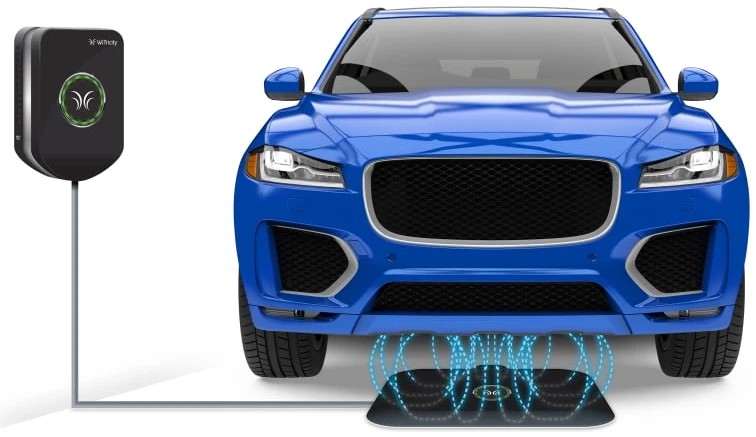
Wireless charging for EVs operates on the principle of electromagnetic induction [2,3]. Similar to how your smartphone charges wirelessly, a charging pad embedded in the ground transmits energy through an electromagnetic field. When the vehicle is parked over the pad, its receiving coil picks up this energy and converts it into electricity, charging the battery (Fig. 1).
Figure 1. EV wireless charging
system
Benefits and Advantages
With technology rapidly advancing, it comes as no surprise that wireless charging has become a hot topic in recent years. This innovative solution is revolutionizing the way we power our devices, offering convenience, efficiency, and a tangle-free experience. Electric vehicles have come a long way in recent years, with significant strides being made in improving their power capabilities. Here are some key advancements shaping the future of EV power.
Wireless charging offers several advantages over traditional plug-in methods. The automotive industry is actively integrating wireless charging into electric vehicles (EVs) and plug-in hybrid electric vehicles (PHEVs). This allows drivers to conveniently charge their vehicles without the hassle of physical connectors. Wireless charging pads embedded in parking lots and garages enable automatic charging, making EVs more accessible and appealing to a broader audience [4].
Convenience: Eliminate the need for messy cables and fumbling with connectors in all weather conditions. Simply Park your car and it automatically starts charging.
Efficiency: Wireless charging devices use efficient
energy transfer methods, ensuring minimal energy loss during the charging process [4].
Enhanced User Experience: Streamline the charging process, making it more user-friendly and accessible for everyone, including individuals with physical limitations.
Reduced Wear and Tear: Eliminate the wear and tear associated with frequent plugging and unplugging, potentially system extending the life of the charging port and cable. Figure 2. Electric roads for EV
Automation Compatibility: Integrate seamlessly with future automated parking systems, allowing vehicles to self-park onto charging pads, further simplifying the process.
Lower Accident Risk: EV charging cables can become damaged over time, particularly in extreme heat and cold areas, which can be hazardous to the vehicle and its owner. No wires mean less risk, and replacing cables is expensive, too.
Save Time: Although wireless charging is no faster than regular EV charging, you save a little time by not having to get out of the vehicle to plug in, etc. And again, once dynamic charging becomes a reality, the amount of time saved on charging could be substantial (Fig.2) [5].
Challenges
While electric vehicle power has experienced remarkable progress, several challenges remain on the path to widespread adoption. Addressing these obstacles is crucial for the future growth and success of EVs. Let's take a closer look at the key challenges:
Charging Infrastructure: The availability and accessibility of charging stations need to improve to alleviate range anxiety and facilitate long-distance travel. Expanding the charging network and investing in faster-charging technologies will be vital.
Battery Technology: Despite advancements, the high cost and limited energy density of batteries are still significant barriers. Enhancements in battery technology are essential to make EVs more affordable and increase their range further.
Standardization: Although efforts have been made to establish industry standards, further standardization is required to ensure compatibility and interoperability between different EVs and charging systems. This will streamline the charging process and enhance user convenience.
Vehicle-to-Grid Integration:
Experience the future of eco-friendly travel with our state-of-the-art charging station, designed to keep you moving seamlessly on your journey.
Integrating EVs with the grid has the potential to create a more sustainable and efficient energy ecosystem. However, challenges exist in terms of technology integration and infrastructure requirements. Exploring solutions for vehicle-to-grid integration is vital to maximize the benefits of electric vehicles.
The Future Solutions
Although challenges persist, there are promising developments on the horizon that can potentially overcome these barriers. Here are some future solutions that could shape the power capabilities of electric vehicles:
Solid-State Batteries: Solid-state batteries offer higher energy density, faster charging times, and longer lifespan compared to conventional lithium-ion batteries. Significant research and development in this field may lead to more efficient and affordable electric vehicle batteries in the future.
Wireless Charging: Wireless charging technology eliminates the need for physical connections, offering convenience and hassle-free charging. Development and integration of wireless charging infrastructure can revolutionize the EV charging experience.
Grid Integration: As the integration of renewable energy sources increases, the synchronization between EV charging and renewable generation becomes crucial. Smart charging solutions and optimized charging algorithms can help balance energy demands and reduce stress on the grid.
Advanced Materials: Ongoing research into advanced materials, such as graphene and silicon anodes, hold the potential to enhance the energy storage capabilities of batteries. These materials could pave the way for more powerful and efficient electric vehicles.
Conclusion:
Wireless charging offers a glimpse into the future of convenient and user-friendly EV charging. While challenges remain, advancements in technology and infrastructure development hold great promise. As the automotive industry embraces more sustainable and efficient solutions, wireless charging, powered by the ingenuity of RF technology, is poised to play a vital role in shaping the future of mobility.
ElGhanam, E.; Hassan, M.; Osman, A. Design of a High Power, LCC-Compensated, Dynamic, Wireless Electric Vehicle Charging System with Improved Misalignment Tolerance. Energies2021, 14, 885. https://doi.org/10.3390/en14040885.
Assawaworrarit, S., Fan, S. Robust and efficient wireless power transfer using a switch-mode implementation of a nonlinear parity–time symmetric circuit. Nat Electron3, 273–279. (2020).
Vulnerabilities in Automotive Keyless Entry Systems: Unveiling the RollBack Attack
by Lyudvig Hovsepyan, YSU, NI Technical Support Engineer
Introduction:
Automotive Remote Keyless Entry (RKE) systems have revolutionized the way car owners interact with their vehicles, providing a seamless experience of locking and unlocking without the need for a traditional mechanical key.
The implementation of disposable rolling codes has been a cornerstone in enhancing the security of these systems, ensuring that each key fob button press generates a unique code, thereby thwarting simple replay attacks.
RollJam and the Need for Continuous Deployment:
While RKE systems have successfully thwarted traditional replay attacks, a prior exploit known as RollJam demonstrated a vulnerability that could compromise rolling code-based systems. By employing a sequence of signal jamming, capturing, and replaying, an attacker could uncover the subsequent valid unlock signal yet to be utilized. However, RollJam required continuous deployment to maintain effectiveness, as the captured signals became invalid if the key fob was used again without the RollJam attack in place.
Introducing RollBack: A Time-Agnostic
Replay-and-Resynchronize Attack:
In a new development, researchers have uncovered a novel attack called RollBack, which poses a significant threat to most modern RKE systems.
Unlike RollJam, RollBack doesn't necessitate continuous jamming. Instead, it capitalizes on a time-agnostic property, enabling the attacker to capture signals once and exploit the vulnerability at any point in the future without the need for continuous deployment.
RollBack Mechanics:
RollBack leverages the phenomenon of rolling codes becoming resynchronized back to a previous code used in the past. By consecutively replaying a few previously captured signals, the RKE system can be tricked into reverting to a previous code, allowing all subsequent yet already-used signals to work once again. Notably, victims may remain unaware of the attack, as the key fob functions seamlessly before and after the exploitation.
Testing and Vulnerability Assessment:
Ongoing analysis, incorporating crowd-sourced data, has shed light on the susceptibility of different vehicle makes and models to the RollBack attack. Surprisingly, approximately 50% of examined vehicles in the Asian region exhibit vulnerability to RollBack, emphasizing the urgency for enhanced security measures.
Automation of RKE System Testing:
As the automotive industry progresses towards increased automation, rigorous testing of RKE systems becomes paramount. Manufacturers must adopt comprehensive testing protocols that go beyond conventional measures to identify and rectify vulnerabilities like RollBack. In a world where car-sharing and renting scenarios are prevalent, attackers find the time-agnostic nature of RollBack particularly attractive, making the need for robust security measures even more critical.
Conclusion:
The RollBack attack poses a substantial threat to the security of RKE systems, especially in the Asian region where vulnerability rates are notably high.
The text discusses the vulnerability of Remote Keyless Entry (RKE) systems to attacks, particularly focusing on the limitations of rolling code technology that has been widely implemented since the late 1990s. It mentions the RollJam attack in 2015, which could break rolling code-based systems. The text introduces a new attack called RollBack, which is a time-agnostic replay-and-resynchronize attack against modern RKE systems. RollBack doesn't require signal jamming, making it more versatile, and it can exploit vulnerabilities in the rolling code mechanism by replaying previously captured signals. The authors claim that approximately 70% of vehicles are vulnerable to some variant of RollBack, with Asian manufacturers being more affected. The text encourages the crowd-sourcing of a database to identify vulnerable vehicles. Countermeasures and patches are suggested for vehicle owners to avoid signal jamming-based RKE attacks, but the root cause of the vulnerability remains unidentified, making it challenging to implement effective solutions at the moment.
A. Paul, R. Chauhan, R. Srivastava, and M. Baruah, “Advanced Driver Assistance Systems,” SAE Technical Paper 2016-28-0223, https://bit.ly/3aJUEUz, Feb 2016 [Accessed: Jul 2022].
M. Lake, “HOW IT WORKS; Remote Keyless Entry: Staying a Step Ahead of Car Thieves,” New York Time post, https://nyti.ms/3DLnSyS, Jun 2001 [Accessed: Jul 2022].
Automotive Engineering Corner
Tire Pressure Monitoring Systems (TPMS) Unveiled: A Closer Look at Direct TPMS
by Marianna Faltajanyan, YSU
Introduction:
TPMS, or Tire Pressure Monitoring System, is a technology designed to monitor the air pressure of a vehicle's tires and alert the driver if it falls below a recommended level. It is used in various vehicles, including cars, trucks, and motorcycles. This article explores the broader concept of TPMS and delves into the specifics of Direct TPMS, shedding light on its advancements and impact on driving experiences.
Tire Pressure Monitoring Systems (TPMS):
TPMS is an essential automotive technology designed to monitor tire pressure, a factor crucial for vehicle safety and performance. Its primary function is to alert drivers when tire pressure falls below the recommended levels. Properly inflated tires ensure optimal traction, handling, and fuel efficiency while minimizing the risk of accidents caused by underinflated tires.
Importance of TPMS:
TPMS addresses a common issue—improper tire pressure. Underinflated tires can lead to decreased fuel efficiency, uneven tire wear, and compromised handling. TPMS mitigates these risks by providing real-time information about tire pressure, allowing drivers to take corrective action promptly.
Features of TPMS:
Pressure Monitoring: Continuously monitors tire pressure in real-time.
Alert System: Notifies the driver when tire pressure is too low, helping prevent accidents and improve fuel efficiency.
Accuracy: Provides accurate and immediate information about tire pressure status.
Automatic System: Often integrated into the vehicle's electronics, requiring minimal input from the driver.
Types of TPMS:
Direct TPMS: Uses pressure sensors within each tire to directly measure the pressure. Offers real-time and precise data.
Indirect TPMS: Monitors tire pressure by assessing the speed and wheel rotation, making indirect estimates based on variations in tire size. Generally, less precise than direct TPMS.
These systems contribute to vehicle safety, fuel efficiency, and overall performance by ensuring that tires are properly inflated.
Direct TPMS Defined:
Direct TPMS stands out for its precision and accuracy. It employs pressure sensors within each tire, providing real-time data directly to the vehicle's computer system. This direct measurement ensures immediate and reliable information about tire pressure status.
Key Components of Direct TPMS:
Individual pressure sensors are a cornerstone of Direct TPMS. These sensors, typically located on the tire's valve stem or inside the tire, constantly monitor pressure levels. The collected data is then transmitted to the vehicle's onboard computer system.
Real-time Monitoring and Alerts:
One of the significant advantages of Direct TPMS is its ability to offer real-time monitoring. As the sensors detect changes in tire pressure instantly, drivers receive prompt alerts when pressure levels deviate from the recommended values. This timely information allows for quick corrective action, reducing the risk of accidents and improving overall road safety.
Integration with Vehicle Electronics:
Direct TPMS seamlessly integrates with the vehicle's electronic systems. The data collected by the sensors is processed by the onboard computer, providing a user-friendly and automatic solution. This integration enhances the overall driving experience, requiring minimal input from the driver.
Benefits of Direct TPMS:
Enhanced Safety: By promptly alerting drivers to low tire pressure, Direct TPMS contributes to safer driving conditions.
Fuel Efficiency: Properly inflated tires lead to improved fuel efficiency, saving drivers money and reducing environmental impact.
Extended Tire Life: Monitoring and maintaining optimal tire pressure helps extend the lifespan of tires, reducing the frequency of replacements.
Conclusion:
In conclusion, TPMS, with its Direct and Indirect variants, has revolutionized vehicle safety and performance. Direct TPMS, with its precision and real-time monitoring capabilities, exemplifies the technological advancements aimed at creating safer and more efficient driving experiences. As automotive technology continues to evolve, the role of TPMS, particularly Direct TPMS, remains pivotal in ensuring that our journeys on the road are not only smooth but also safe and sustainable.
Automotive Engineering Corner
Vehicle-to-everything (V2X)
by Marietta Hakobian, YSU
Introduction: In the fast-evolving landscape of automotive technology, the integration of Radio Frequency (RF) applications has become ubiquitous, revolutionizing the driving experience with features like wireless connectivity, advanced driver assistance systems (ADAS), and vehicle-to-everything (V2X) communication. However, as RF Technologies continues to advance, ensuring the reliability and performance of these systems poses significant challenges for automotive manufacturers.
V2X (vehicle-to-everything) is a
communication technology that enables vehicles to exchange data with various elements in their environment, including other vehicles (V2V), pedestrians (V2P), infrastructure (V2I), and networks (V2N). By sharing information, V2X aims to improve traffic efficiency, enhance safety, reduce pollution, and enable advanced driver-assistance systems (ADAS) and autonomous driving.
Types of V2X Communication
V2V - Vehicle-to-vehicle communication refers to the exchange of data between vehicles. This technology allows vehicles to share information such as speed, position, and direction, enabling them to detect potential collisions, coordinate movements, and maintain safe distances from one another. By establishing real-time connections between vehicles, V2V enhances situational awareness and helps to prevent accidents, improve traffic flow, and optimize fuel consumption. V2V is an essential component of advanced driver-assistance systems (ADAS) and autonomous driving, as it enables vehicles to make informed decisions and respond proactively to road conditions.
V2I - Vehicle-to-infrastructure communication enables vehicles to interact with various infrastructure elements, such as traffic signals, road signs, and sensors embedded in the roadways. This connectivity allows vehicles to receive important information, like traffic light status, speed limits, road conditions, and the presence of road hazards or construction zones.By integrating this data, V2I can help reduce congestion, optimize traffic signal timings, and enhance overall transportation efficiency. Additionally, V2I communication can provide valuable input for ADAS and autonomous vehicles, contributing to safer and more effective navigation.
V2P - Vehicle-to-pedestrian (V2P) communication focuses on the interaction between vehicles and pedestrians, cyclists, or other vulnerable road users. This technology typically relies on smartphones, wearables, or other devices carried by pedestrians to transmit their location and movement data. Vehicles equipped with V2P can then use this information to identify and avoid potential collisions, enhancing safety for all road users. For example, a V2P-enabled vehicle may receive an alert if a pedestrian is about to cross the street, allowing the driver or autonomous system to slow down or stop accordingly.
V2N - Vehicle-to-network communication connects vehicles with broader communication networks, such as cellular or Wi-Fi networks. This connectivity allows vehicles to access real-time traffic information, weather updates, and route suggestions, facilitating more efficient and safer journeys.V2N can also enable remote diagnostics and over-the-air updates, allowing manufacturers to monitor vehicle health and deliver software improvements. Moreover, V2N communication supports the development of smart cities and connected transportation ecosystems by integrating vehicle data with other sources, such as public transit systems and city infrastructure.
The Future of V2X with MQTT:
V2X technologies are extending IoT (Internet of Things) connectivity to the road by creating a connected ecosystem of vehicles, infrastructure, pedestrians, and networks, transforming the way we travel. This interconnected system relies on the exchange of data in real-time to improve traffic efficiency, enhance safety, and enable advanced driver-assistance systems (ADAS) and autonomous driving.
As vehicles become more sophisticated and more roadside infrastructure equipment is deployed, the need for seamless communication and data transfer between cloud, vehicle and roadside infrastructure becomes increasingly critical. Consequently, the challenge of transferring large volumes of real-time data must be addressed to unlock the full potential of V2X and autonomous vehicles.
To facilitate the high-speed and reliable data transfer required for V2X, advanced communication protocols and network technologies are essential. The MQTT (Message Queuing Telemetry Transport) protocol is a key enabler that can help overcome this challenge. MQTT is a lightweight, open-source, and publish-subscribe messaging protocol designed for constrained devices and low-bandwidth, high-latency, or unreliable networks. It is particularly well-suited for IoT applications, including connected vehicles, due to its efficient and reliable communication capabilities.
Automotive Engineering Corner
Advancements in Automotive RF Technologies: Ensuring Safety and Connectivity in V2X Systems
by Sara Gyozalyan, YSU
Pioneering a Connected Automotive Ecosystem:
The automotive industry is experiencing a profound transformation propelled by technological advancements. From enhancing the driving experience to revolutionizing vehicle safety, these innovations are reshaping vehicles into interconnected entities within the vast landscape of the Internet of Things (IoT). Moreover, with a vision for an autonomous future on the horizon, where vehicles can autonomously navigate and respond to their surroundings, the industry is under immense pressure to introduce innovative, safe, and compliant products to the market rapidly.
Unlocking the Potential of V2X Communication
Central to this evolution is the emergence of Vehicle-to-Everything (V2X) communication systems, enabling vehicles to exchange critical information wirelessly. By facilitating communication between vehicles (V2V) and infrastructure (V2I), V2X systems hold the promise of significantly reducing accidents by detecting critical traffic situations before they occur. However, the realization of this vision hinges on the seamless and reliable exchange of information among vehicles, even under adverse conditions, ensuring accurate situational awareness and preemptive action.
Navigating the Complexity of V2X Architecture
The architecture of V2X systems is governed by standards such as IEEE 802.11p and ETSI, dictating communication methodologies and ensuring interoperability. Key components, including Dedicated Short Range Communication (DSRC) hardware and GPS connectivity, form the backbone of V2X devices, which are integral to in-vehicle infotainment systems or standalone units. Moreover, the suitability of IEEE 802.11p protocol underscores its role as the foundation of V2V communication, offering low latency and robust performance in challenging signal conditions.
Testing the Boundaries of V2X Technology
As V2X applications continue to evolve, comprehensive testing methodologies are essential to validate performance, reliability, and safety. Field Operational Tests (FOTs) serve as large-scale real-world testing programs, complemented by simulations to assess efficiency, quality, and robustness. Moreover, ensuring sensor performance, algorithm validation, and system integration are critical aspects of V2X testing, alongside addressing communication performance and security concerns.
Driving Towards a Connected Future
In conclusion, the verification and validation of automotive RF applications in V2X scenarios are imperative for ensuring the integrity and functionality of modern vehicle technologies. By embracing interdisciplinary collaboration, innovative testing methodologies, and adherence to regulatory frameworks, automotive stakeholders can accelerate the adoption of V2X technologies, ushering in a safer, smarter, and more connected era of transportation systems.
Automotive Engineering Corner
The Role of Advanced Computing in Automotive Applications
by Lilit Papyan, YSU
Unleashing Advanced Computing Capabilities (ACC)
In the rapidly evolving automotive industry, Advanced Computing Capabilities (ACC) have emerged as a cornerstone for innovation, driving significant advancements in vehicle safety, performance, and user experience. ACC encompasses a broad array of technologies, including artificial intelligence (AI), machine learning, big data analytics, and cloud computing, all of which are collectively propelling the automotive sector into a new era of smart mobility.
The Core of ACC: Enhancing Vehicle Intelligence
ACC's influence on automotive applications is centered on elevating vehicle intelligence. Modern vehicles transcend mere transportation; they are intricate, interconnected systems capable of instant decision-making, adaptive learning from user interactions, and seamless interaction with surrounding vehicles and infrastructure. This advancement in vehicle intelligence owes much to the integration of ACC technologies, empowering the processing and analysis of massive datasets at unparalleled speeds.
Safety and Efficiency: A Dual Focus
One of the most notable applications of ACC in the automotive sector is in the realm of safety and efficiency. Advanced driver-assistance systems (ADAS), which rely heavily on ACC, are now commonplace in modern vehicles. These systems, including adaptive cruise control, lane-keeping assistance, and automated emergency braking, utilize AI and machine learning algorithms to analyze real-time data from sensors and cameras, enhancing vehicle safety by predicting and preventing potential accidents.
Moreover, ACC plays a crucial role in optimizing fuel efficiency and reducing emissions. Through the analysis of driving patterns and environmental conditions, ACC-enabled systems can adjust vehicle operations to minimize fuel consumption and carbon footprint, contributing to the global effort to combat climate change.
Towards Autonomy: The ACC Journey
Perhaps the most ambitious application of ACC within the automotive industry is the development of autonomous vehicles. Achieving full vehicle autonomy requires sophisticated AI algorithms capable of making complex decisions in real-time, a task that necessitates immense computational power and advanced machine learning techniques. ACC technologies are at the forefront of this challenge, providing the necessary tools to process and interpret the massive streams of data generated by autonomous vehicles, from navigating urban environments to ensuring passenger safety.
Connectivity and Enhanced User Experience
Beyond safety and autonomy, ACC is revolutionizing the way drivers and passengers interact with their vehicles. Infotainment systems, powered by cloud computing and AI, offer personalized content, real-time traffic updates, and voice-activated controls, significantly enhancing the in-car experience. Furthermore, ACC enables seamless connectivity between vehicles and the broader Internet of Things (IoT), allowing for features such as remote diagnostics, predictive maintenance, and even vehicle-to-vehicle communication.
Future Outlook and Challenges Ahead
As ACC technologies continue to evolve, their impact on the automotive industry is expected to grow exponentially. The ongoing research and development in areas such as quantum computing and 5G connectivity promise to unlock even more advanced applications, further transforming the automotive landscape.
However, the widespread adoption of ACC in automotive applications also poses significant challenges, including cybersecurity risks, data privacy concerns, and the need for robust regulatory frameworks. Addressing these challenges will be critical to ensuring that the benefits of ACC can be fully realized, paving the way for a safer, more efficient, and interconnected future of mobility.
In conclusion, the integration of Advanced Computing Capabilities is reshaping the automotive industry, driving advancements that were once the realm of science fiction into reality. As vehicles become smarter, safer, and more connected, ACC stands as a testament to the transformative power of technology, heralding a new era of automotive innovation.