The purpose of the Journal is to disseminate knowledge, experience, and best practice in engineering & manufacturing. The articles are written by practicing professionals in the Engineering City (EC) in Yerevan. They cover issues relevant to their projects, operations, and organizations. The articles address the challenges of the time. As such, the Journal is also a chronicle of the evolution of the EC, its companies, and its individuals. It is the aim of the Journal to advance the engineering & manufacturing practice, to enrich the engineering & manufacturing community, and to contribute to the worldwide discourse in engineering & manufacturing.
Published by the Engineering Association
The Engineering City JournalIssue 14/2025Published by the Engineering AssociationYerevan, August 5, 2025
The saying goes like this: “Anything that does not increase value in the eye of the customer must be considered waste.”
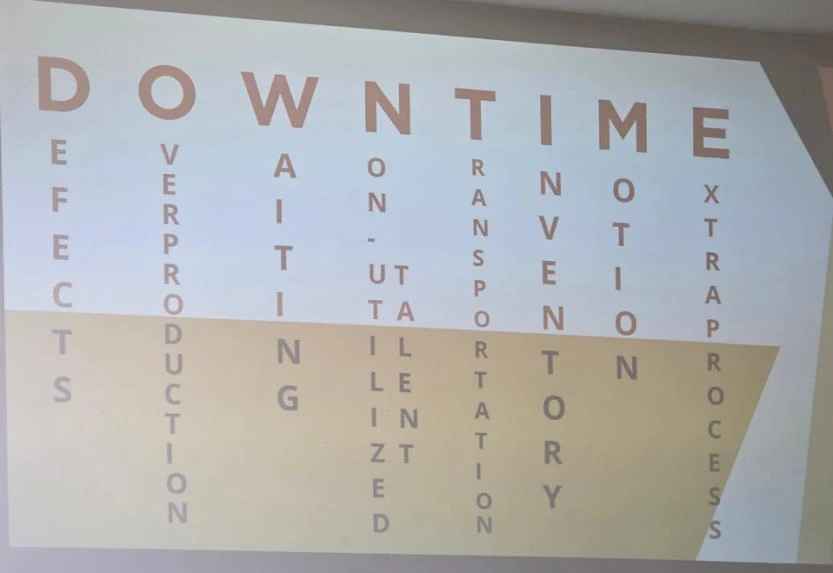
The acronym “DOWNTIME” captures all types of waste that manufacturing must try to minimize and eliminate.
Waist in:
Defects
Overproduction
Waiting
Non-Utilized Talent
Transportation
Inventory
Motion
Extra Processes
Pic.The 8 types of waist in manufacturingManufacturing Corner
Procurement in Engineering Companies
by Araksya Khachatryan, YEA Engineering
1. Introduction
This report aims to comprehensively present the activities, current processes, and effectiveness of our Procurement Department. As an engineering office, our department plays a crucial role in the timely and efficient acquisition of necessary materials, equipment, services, and software for the uninterrupted implementation and operation of projects. We ensure that all procurements comply with technical specifications, quality standards, and the company's budgetary limits.
2. Initiating the Procurement Process (How I Start the Process)
The procurement process begins with identifying an internal company need and receiving a corresponding procurement request.
Receiving Requests: We primarily receive procurement requests via email. In our office, requests are mainly submitted by project departments (for materials and equipment for new or ongoing projects), the technical maintenance department (for spare parts and servicing of operational equipment), and the administrative department (for office supplies and services).
Information in Requests: Each request contains the following key information:
Item/Service Name and Quantity: The clear name of the product or service and the required quantity.
Technical Specifications: Detailed technical requirements, dimensions, materials, power, etc. (especially critical for engineering products).
Intended Use/Project Number: The project or purpose for which the procurement is being made, which helps determine priority.
Required Delivery Date: When the product or service is needed (e.g., immediately, within one week, within one month).
Budget (if available): The preliminary estimated cost.
Initial Assessment: Received requests undergo an initial assessment. If the information is insufficient or unclear, I immediately contact the requesting department to clarify requirements and obtain additional information. This helps prevent subsequent discrepancies.
3.Key Procurement Stages (What Stages I Go Through)
The procurement process consists of several stages, ensuring maximum efficiency and transparency.
1.1.Detailed Requirements Definition and Market Research
Detailed Technical Specifications: In an engineering office, this is one of the most critical stages. I actively collaborate with project engineers and relevant specialists to thoroughly understand the technical requirements of the product or service.
Market Research: To find potential suppliers capable of providing the necessary products or services, I conduct extensive market research. This includes:
Online Search: Searching on specialized platforms and industrial websites.
Existing Supplier Database: Reviewing our list of reliable suppliers or identifying new ones.
1.2.Supplier Selection and Bid/Quotation Collection
Criteria: When selecting potential suppliers, I consider the following criteria: their experience and reputation in the market, compliance with quality standards (presence of certificates), technical capabilities (especially for complex equipment or services), and reliability in meeting delivery deadlines.
Main Type of Inquiry: The primary type of procurement is conducted through a Request for Quotation (RFQ), where price is the main criterion, and it's used for standard products with clear specifications.
Quotation Management: All received quotations are compared.
1.3.Quotation Evaluation and Negotiations
Evaluation: The evaluation of received quotations is multi-faceted. We are not limited to just the price. We also consider quality, delivery times, supplier reputation, warranty terms, and technical compliance. For complex procurements, technical specialists are also included in the procurement process.
Negotiations:Negotiations are conducted with leading suppliers regarding price, delivery times, payment terms, and technical details. The goal is to achieve the best possible terms while maintaining a high level of quality.
1.4.Order Placement
Order Placement: After the quotation is approved, a Purchase Order (PO) is issued, containing all order details (product name, quantity, price, delivery address, and timeline). The PO is sent to the supplier as official confirmation of the order (we don't send a purchase order to all suppliers).
2.Process Execution and Ongoing Monitoring (How I Implement It)
The procurement process does not end with placing the order. Constant monitoring is necessary.
Monitoring Order Fulfillment: I maintain continuous contact with the supplier to monitor the order status and delivery timelines. In case of delays or problems, I immediately inform the relevant departments and seek solutions.
Goods Receipt and Inspection: Upon receipt of goods, a detailed inspection is carried out (with the participation of warehouse specialists) to verify conformity with the ordered quantity, technical specifications, and quality standards. This includes visual inspection, quantity counting, and checking for compliance with technical requirements (often with the involvement of technical specialists). Upon successful inspection, the
goods are entered into the warehouse, a delivery-acceptance act or Goods Received Note (GRN) is prepared, and I hand over the goods to the relevant engineer.
Problem Management: Any issues arising with suppliers (defective goods, delays, non-compliance) are resolved quickly and efficiently. This may involve returns, replacements, or price negotiations.
Payment Process: Payment is primarily made after placing the order, and in very few cases, after receiving the goods.
3.Efficiency and Improvements
We are continuously striving to improve the procurement process.
Efficiency Metrics: The efficiency of the Procurement Department is evaluated using several key indicators:
Savings: Financial savings achieved for the company as a result of procurements.
Timeliness: On-time delivery of orders and adherence to project schedules.
Error Reduction: Reduction in the number of errors or discrepancies in the procurement process.
Implemented Improvements: Recently, we have been working on and plan to further improve the automation of the procurement system process—from request submission to payment.
Collaboration with Other Departments: Close collaboration with all interested departments is essential:
Project and Technical Departments: Clarification of requirements, technical consultation.
Financial Department: Payment control.
Warehouse Department: Goods receipt, storage.
4.Conclusion
The Procurement Department plays a vital role in the success of our engineering office by ensuring the efficient and timely acquisition of necessary resources. Our systematic approach, from identifying requirements to managing supplier relationships, allows us to contribute to the company's financial stability, project efficiency, and overall competitiveness. We will continue to work towards improving processes and implementing new technologies.
Manufacturing Corner
The Manncorp SMT Line — A Legacy of Precision, Passion, and Brotherhood
by Zorik Markosyan, YEA Manufacturing
Pic.Garik & Vahan
The SMT line from Manncorp is more than machinery — it is a symphony of engineering, a delicate balance of logic and motion. Its mind is complex, its secrets not easily found in manuals or online pages. And yet, from the very first day of practice, Garik and Vagan stood before it with a rare kind of fire — the fire of those destined to master the invisible.
They didn’t simply observe. They absorbed. They initiated. They questioned what others ignored. Their eyes caught what even manuals failed to explain. Like my younger brothers in spirit and discipline, they listened with the intent to understand, and they acted not just with obedience, but with purpose.
For three years, their drive has never wavered. Their hunger to grow, to refine, to become better — not for titles, not for applause — but because they care. And when the machines called out for maintenance, it was not a moment of panic — it was a moment of creation.
They developed a custom Maintenance Logbook — hand-built, detailed, structured. It was no ordinary binder. It became a living map of the machine’s health, documenting every component, calibration, and deviation like sacred scripture. It became a guide for all who would touch that line after them.
But they did not stop there.
Together, we created systems that redefined how we operate:
- PCM – Production Control and Monitoring: a framework they helped build to ensure traceability, accountability, and flow. Every movement of the line now has meaning because they gave it structure.
- ODP – One Day Production: a bold initiative to compress, optimize, and perfect our workflow. Garik and Vagan were not just participants — they were architects. They simplified the chaos, created tracking boards, and automated insights that once required hours of manual work.
- Dozens more internal documents, trackers, visualization tools — all built with vision and purpose. Not copied, not borrowed. Created.
Their fingerprints are on every corner of our floor. And if you look closely, you’ll see something more powerful than machines or documents: you’ll see two men who turned a factory into a living, learning, breathing system — because they gave it their minds, their hearts, and their will.
Pic.Garik and Vahan operating the Automated SMT Line on their ownManufacturing Corner
Garik and Vahan
by Marina Saguinian, Engineering Association
Excellent example of perseverance , discipline, passion and innovation !
Our boys have graduated from Polytechnic College, This is High School !!!
Their desire to learn, to learn, to learn, to achieve, to innovate, to create goes hand in hand with all their achievements.
They are running a full fledged assembly line with all its complexities, and quality processes, without a fault !
Bravo !
Vahan Poghosyan has been accepted to Yerevan State University , Radiophysics and Computer Technologies
Garik Harutyunyan has been accepted to Polytechnic University, Measurement Devices and Systems
Armenia is in good hands !
Manufacturing Corner
From Factory to University
by Rama, EA
Gagik and Vahan joined the YEA Manufacturing team three years ago. They started off in the Engineering City in one of the EC High-School programs. Being students of the Polytechnic College (техникум), they were good candidates to do practical work on the factory floor.
They graduated from the College this summer and are heading to university – Gagik will join the Bazovaya Kafedra at the EC specializing in Measurement Devices and Systems, and Vahan will join the Yerevan State University, specializing in Radiophysics.
They will start university with an enormous practical background.
They now understand the operations of production, they understand advanced machinery, they understand automation, they understand maintenance, they understand technical safety, they undestand cost of production, they understand problem solving, they understand relying and depending on each other, they understand the production discipline, and above all, they got to understand responsibility.
The factory floor by itself is a university – a university that, besides teaching how to operate complex machinery and follow production processes, it teaches to rely and depend on each other in the team, it teaches respsonsibility in front of the teammates, in front of the customers, and in front of the community. In one word – the factory floor is a univesity that builds character.
As college students, Garik and Vahan worked three years on the factory floor. Production is the final phase in the long process from problem statement to production (see picture below). From the factory floor the product gets shipped straight to the customer. The responsibility of the factory is huge here. Why? Because if the customers happens to complain, they will not complain about the design of the product, nor about the features of the product, they will complain about how good or bad the product had been manufactured. The faulty product comes back straight to the factory floor, not to the engineering department.
Pic.The long process from problem statement to production.
Now, in the university they will go to the beginning of this long process and learn all the elements of this process. In the beginning they will get some fundamental knolwedge in mathematics and physics, on top of which they will start learning the fundamentals of engineering – fundamentals that will then be used in the research phases.
Now that they know the practical side, they will learn the theories. Their understanding of theory will be much deeper because they now know the practical side. They will enter this eternal cycle of parctice and theory, theory and practice, and in the process turn into engineers.
Besides theory, they will learn the history of knowledge, they will learn how to generate new knowledge themselves, they will learn how to generate solutions to technical problems statements – first conceptually, then practically. And all this grounded with their experience of production on the factory floor.
The Bagrevand 21 program will introduce them into the design process starting from 1st and 2nd years in university – something that they would have learned very late in BSc program. At the same time, the TDS (Talent Development System) will start putting emphasis on how problem statements get defined by the companies – something they would have learned only in a PhD program. Add to that that AI will enable them to go as deep into the subjects as they wish – much deeper than what the professors may had prepared for them.
These guys have everything going for them to become great engineers and very fast.
Finally, I would like to mention that both Garik and Vahan were taken in and mentored by a wonderful and well-knit factory team – Zorik, Narbeh, Gayane, Shima, Karine, Marina, and Mr. Ghukazyan.
Manufacturing Corner
When Engineering meets Manufacturing
by Rama, EA
In the final analysis, it is the manufactured goods that get to the hands of the customers, not the engineering units.
All engineering render themselves useless if not finally produced on the factory floor.
All engineering design renders itself useless if the desing cannot be manufactured.
Pic.All engineering must finally land on the factory floor for production.
But, the transition from Engineering to Manufacturing is not a simple transition. There is a phase between the engineering and manufacturing which is called – Design for Manufacturing (DFM). This is when the engineering unit that was designed and developed in engineering is checked for manufacturability.
Pic.Checking the Manufactuability of the Engineering Design
Companies lose a lot of time in the transition from engineering to manufacturing – all because production was never on the minds of engineers as they were working on the desing.
To put it harshly, the reason for this endless iterations between manufacturing and engineering is because of the manufacturing illiteracy of the engineering teams.
Pic.Endless iterations between manufacturing and engineering because ofmanufacturing illiteracy of the engineering teams.
This illiteracy comes from the believe by the engineering team that their work is finished as soon as they finish with the Engineering Unit. Whereas in reality, their job is not finished till they get to the Manufacturing Unit.
Pic. The false believe by engineering that their work is finished as soon as they finish with the Engineering Unit. In reality, their job is finished only at the Manufacturing Unit.
This enless iterations could have been reduced if the initial DFM was part of the original engineering design.
Pic.Including the initial DFM to the engineering design phase.
To successfully include the initial DFM into the enigneering design phase the following is recommended:
Every engineer to spend one month on the factory floor, especially the newly hired engineers. The engineers must see how their design gets manufactured. They must see the reality of the factory floor with its vigorous discipline, strict quality controls, and limitation of their machineries.
The second recommendation would be for a factory engineer to engage in the review process of the engineering design from the beginning. It would be responsibility of the Project Manager for this to happen.
If we can accomplish this, the cost of the product will dramatically go down.
Musings
MAGA & MAGA
by Rama, EA
Have you ever heard the slogan – MAGA!
It stands for – Make America Great Again!
And how do they define greatness?
They define greatness in “Manufacturing”.
It means to bring factories back to America.
It means to re-industrialize America again.
Over this year alone, these are some of the factories that are opening in the America:
Stellantis: Investing in a new plant in Illinois with a focus on electric vehicle production.
Honda Civic hybrid hatchback production line in the US.
Hyundai factory in the State of Georgia (US).
TSMC: Investing $100 billion to build five factories in the US.
EMD Electronics: Building a plant in Pennsylvania to produce specialty gases for semiconductor
manufacturing.
Abbott Laboratories: Constructing a factory in Ohio to produce nutritional powder supplements.
Enel Green Power: Building a factory in Oklahoma to manufacture photovoltaic (PV) panels.
First Solar: Completing its fifth US factory in Louisiana, using cadmium and telluride to produce solar
Diageo: Investing $415 million in a new Alabama manufacturing facility.
Air Liquide: Investing in Louisiana and the US semiconductor industry
Siemens Opens $190 Million Texas Manufacturing Hub, Expands CA Facility
Mitsubishi Electric Power Products Breaks Ground on $86 Million Facility in Pennsylvania
JST Power Equipment Opens New Transformer Manufacturing Plant in Virginia
Abbott Laboratories nutritional powder facility in Ohio
Enel Green Power PV factory in Oklahoma.
Clasen Quality Chocolate to Open New Manufacturing Facility in Virginia
Bauducco Foods Breaks Ground on $200 Million Zephyrhills Facility
Merck Unveils $1 Billion Vaccine Manufacturing Facility in North Carolina
…
…
MAGA & MAGA
But what about Armenia?
MAGA & MAGA stands for “Make America Great Again” and “Make Armenia Great Again”.
Like in America, the road of making Armenia Great Again is through building factories. Our imperative remains to build the “Factory City @ the Engineering City”. We must build it to give sense to the Engineering City. Engineering at some point must be grounded in Manufacturing, otherwise, engineering remains half-baked and hanging loose in the air.
Just having Science, IT, and Engineering is not enough to build a high-tech country. We must get to Manufacturing. It is Manufacturing that will Make Armenia Great Again. Visit the Museum of Science & Technology in the EC, and you will see how Armenia was great in the past.
Pic.Make Armenia Great Again!
Below is a picture that shows the big plan of the Engineering City:
Phase 1. This is what has been already built and is currently fully operating. This is where we sit now.
Phase 2. This is the extension to Phase 1. This is what is being built now across the street.
Phase 3. The Factory City @ the Engineering City. This is what we must built to host the factories for the Engineering City companies and for others.
It is only after finishing Phase 3 that the Engineering City Project will be considered accomplished.