The purpose of the Journal is to disseminate knowledge, experience, and best practice in engineering & manufacturing. The articles are written by practicing professionals in the Engineering City (EC) in Yerevan. They cover issues relevant to their projects, operations, and organizations. The articles address the challenges of the time. As such, the Journal is also a chronicle of the evolution of the EC, its companies, and its individuals. It is the aim of the Journal to advance the engineering & manufacturing practice, to enrich the engineering & manufacturing community, and to contribute to the worldwide discourse in engineering & manufacturing.
Published by the Engineering Association
The Engineering City JournalIssue 18/2025Published by the Engineering AssociationYerevan, September 23, 2025
The YEAE has started the process of automating all their internal processes using AI and n8n. They are working on the roadmap and the milestones for each of the following departments:
Procurement
Production
Inventory
Engineering
Sales & Marketing
QA & QC
Internal departmental interaction
They are guided by the North Star in Engineering Practice:
They are committed to sharing their experience with the EC community at each step along the way on the pages of this Journal.
Engineering Management
Engineering in One Slide
by Rama, Engineering Association
TDS
What is the Purpose of Education?
by Rama, Engineering Association
What is the purpose of education after all?
Is it . to get a job?
. to make a living?
. to acquire the skills to live in the society?
. to find one’s passion and practice it?
. to satisfy one’s curiosity about the world?
. …
I think that we must find the purpose of education in the purpose of Life itself (Life with a capital L).
So, what is the purpose of Life?
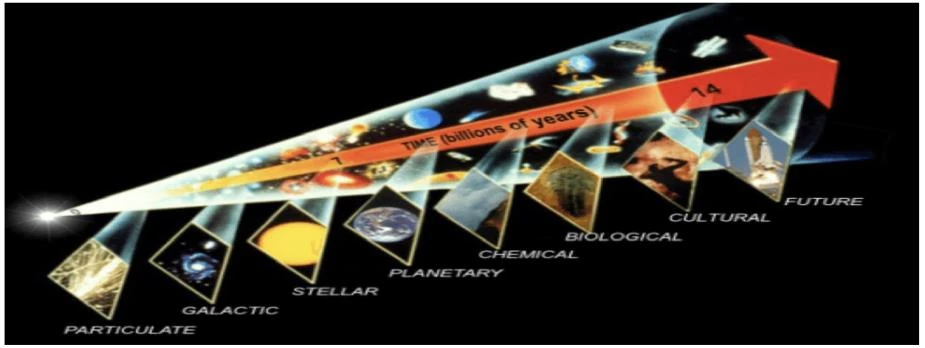
Cosmic dust, given the right conditions, evolved into earthly nature; earthly nature, given the right conditions, evolved into life; and life evolved into human life.
Pic.Cosmic dust evolved into earthly nature, earthly nature evolved into life,and life evolved into human life.
We can see that there is a stubborn vector in this evolution – an evolution from the lowest forms to the higher forms, an evolution from the simple to the complex. We will call this evolution - vectored evolution, and we will call this vectored evolution - the Purpose of Life.
We came to life not by our own will, nor will we leave it by our own will. We were brought to life by life, and it is life that will take us away. It does this with only one purpose – to evolve. Because evolution is its only way to survive. It brings us to life with the purpose that we evolve it. We are just the instruments for its evolution. This makes life our master – a master who’s purpose we must serve.
Let’s put this evolution on the vector of time – from stone age to our current times:
Each generation lives within a certain life window:
Pic.Each generation lives in a certain window of timerepresented by a rectangle on this vector of time.
Each generation serves life’s evolution by solving the challenges of its times. Our generation is solving the challenges of our times, the next generation will be solving the challenges of their times. Each solution to a challenge creates new challenges of a higher complexity. Their challenges will be different than ours; their challenges will be of a higher level of complexity than ours. We have just a small window of a generational overlap to transfer knowledge. Beyond that we cannot go, as we don’t know and will never know.
Pic.The responsibility of each generation and the overlap of generations
Engineers understand this picture of evolution and generational responsibility very clearly. We understand humanity’s evolution quite well as we contribute to it directly without any mediation. Here, for example, we see the 14 Grand Challenges of the 21st Century as formulated by the American Academy of Engineering:
Below, we see the engineering innovations of the last century that addressed the challenges of their time.
And the challenges will get greater and more complex as life evolves into this eternal universe.
So, the purpose of education is the same as the purpose of Life itself:
The purpose of education is to prepare the students to solve the challenges of their generation.
It is this historical perspective that must be fixed in the minds of the students. It must be fixed that life brought them to life to evolve it, That they are called to solve the challenges of their generation - Be it technological, social, cultural, organizational, operational, …
And this is not an easy task as the hustle and bustle of daily life take the attention away from this essence of life.
TDS
History-Based Education
by Rama, EA
Will start with a poem written by Gibran Khalil Gibran from his book – “The Prophet”.
And a woman who held a babe against her bosom said, Speak to us of Children.
And he said:
Your children are not your children.
They are the sons and daughters of Life’s longing for itself.
They come through you but not from you, And though they are with you yet they belong not to you.
You may give them your love but not your thoughts, For they have their own thoughts.
You may house their bodies but not their souls, For their souls dwell in the house of tomorrow, which you cannot visit, not even in your dreams.
You may strive to be like them, but seek not to make them like you.
For life goes not backward nor tarries with yesterday.
You are the bows from which your children as living arrows are sent forth.
The archer sees the mark upon the path of the infinite, and He bends you with His might that His arrows may go swift and far.
Let your bending in the archer’s hand be for gladness; For even as He loves the arrow that flies, so He loves also the bow that is stable.
The Prophet
Education must answer two questions – what must be passed to the children and students, and how must it be passed?
The time overlap between generations is quite small, and we don’t know of the challenges that the next generation will face. All what we can pass on is what we know, not more.
Pic.The overlap of generations.
But if the purpose of education is to prepare students to solve the challenges of their times, yet we don’t know these challenges, how can we prepare them?
I believe that what must be passed on to them is not as much the knowledge that we already know, but the process of how this knowledge has been created.
And how do you teach the process of creating new knowledge?
I believe that we could do that by teaching the history of knowledge. In other words, we should teach knowledge tied to its history.
What is the history of knowledge?
The history of knowledge is really the history of the challenges that caused the knowledge to be created. It is the history of the limitations of the knowledge of the time that had to be overcome, it is the history of the crises that the new knowledge was needed to resolve it. It is the history of experimentations that had to be constructed to discover the new knowledge. In short, it is the history of the context.
In this way, knowledge must be passed in a historic chronology as well. Evey new knowledge must be put in the sequence of knowledge that came before it. This will show the logic of the evolution of knowledge that could be, then, extrapolated into the future.
Pic.Knowledge must be taught in a chronological order.
What will this teach the student?
The student learns to identify the limitation of current knowledge – limitations that must be overcome with new knowledge.
The student learns how to spot trends.
The student sees the logic of the evolution of that knowledge
The student learns how to formulate the challenges (the problem statements).
In short, the student’s mind gets tuned to the challenges of his time and to the limitation of the old knowledge that must be overcome with new knowledge. And this is very valuable.
To summarize, what is being proposed here is:
Knowledge must be taught as the history of knowledge.
Knowledge must be tied to its history.
Knowledge must be taught chronologically.
For example, there is a fascinating series of 46 books on the history of machines and mechanisms. Below, you can find some. I would put more importance on these books, rather than on the actual text books in machines and mechanisms. Why is that? Because it is not knowledge as much as understanding the mechanism of creating new knowledge. And as such, we will understand the actual subject matter better as it will be grounded in its evolutionary perspective.