The purpose of the Journal is to disseminate knowledge, experience, and best practice in engineering & manufacturing. The articles are written by practicing professionals in the Engineering City (EC) in Yerevan. They cover issues relevant to their projects, operations, and organizations. The articles address the challenges of the time. As such, the Journal is also a chronicle of the evolution of the EC, its companies, and its individuals. It is the aim of the Journal to advance the engineering & manufacturing practice, to enrich the engineering & manufacturing community, and to contribute to the worldwide discourse in engineering & manufacturing.
Published by the Engineering Association
The Engineering City JournalIssue 4/2026Published by the Engineering AssociationYerevan, February 26, 2026
System Predictability - From “Accidental Success” to “Engineering Calculation”
by Hripsime Harutyunyan, YEA Engineering
When “It Seems to Work” Is Already a Risk
In many modern engineering projects, success is measured by how quickly a system can be delivered and demonstrated. If it starts, runs, and shows expected behavior in basic scenarios, it is often declared “good enough”.
Such an approach quietly creates hidden technical debt. By selecting a convenient but opaque technology today, an organization effectively takes a high-interest loan. The cost is not paid during development — it is paid later, during integration, verification, or field operation.
At that point, the system does not fail visibly. It fails structurally: behavior becomes hard to reason about, hard to reproduce, and hard to control.
Predictability in Architectural Terms
A predictable (deterministic) system is not defined by speed. It is defined by bounded behavior.
Architecturally, this means:
- the same input produces the same output, - execution time is known and bounded, - behavior does not change implicitly due to load or internal state.
The critical distinction here is between latency and jitter. From an architectural perspective, predictability is not about
minimizing latency — it is about controlling jitter.
A guaranteed 10 ms response is architecturally superior to a nominal 1 ms response that occasionally degrades to 100 ms. The latter breaks assumptions, invalidates timing models, and undermines system-level guarantees.
Sources of Architectural Non-Predictability
In practice, non-predictable behavior rarely originates in hardware. It emerges from architectural choices made to optimize developer productivity:
To these, garbage collection and aggressive caching must be added. While these mechanisms improve average throughput, they destroy the ability to reason about worst-case behavior.
Why These Issues Dominate Engineering Cost
Timing-related issues that cannot be reproduced on demand are the most expensive class of problems an engineering organization faces. They evade standard testing, resist root-cause analysis, reappear after fixes, and undermine confidence in the system.
Only predictable systems allow WCET analysis (Worst-Case Execution Time) — a prerequisite for making provable architectural guarantees.
Where Predictability Is Non-Negotiable
Predictability is required in systems where stability is part of correctness:
- measurement and metrology systems, - control and automation platforms, - test and validation infrastructure, - products with long operational lifecycles.
In these domains, architecture must be designed around the 99th percentile, not the mean. The 1% of abnormal behavior is where failures occur and trust is lost.
Conclusion
Predictability is a core architectural value. A predictable system may sacrifice peak performance or short-term development speed, but it provides something far more important: systems that can be understood, analyzed, verified, and trusted.
In real engineering, this is not an optimization. It is a conscious architectural decision.
Engineering Management
Evolving the Engineering Profession at the EC
by Rama, Engineering Association
Besides gaining experience by doing projects, there is another thing that we must think about – “Evolving the profession itself”.
The engineer of the 70s is different than the engineer in the 80s, 90s, and in the 2026. The profession itself has evolved. The profession itself has its S-curves.
The mission of the EC Journal had been formulated as:
The purpose of the Journal is to disseminate knowledge, experience, and best practice in engineering & manufacturing. The articles are written by practicing professionals in the Engineering City (EC) in Yerevan. They cover issues relevant to their projects, operations, and organizations. The articles address the challenges of the time. As such, the Journal is also a chronicle of the evolution of the EC, its companies, and its individuals. It is the aim of the Journal to advance the engineering & manufacturing practice, to enrich the engineering & manufacturing community, and to contribute to the worldwide discourse in engineering & manufacturing.
It is the last sentence that targets this issue:
It is the aim of the Journal to contribute to the worldwide discourse in engineering & manufacturing.
The technologies have changed, the methods have changed, the approaches to tackle problems have changed.
So, we could either be passive followers of these changes in the profession with a big lag behind others, or we can see the trends of change and lead this change, by which we will be active participants and popularizer of these changes. Meaning – we will be taking leadership.
This sense of leading this change gives us the understanding of ownership of the profession beyond the organization itself. This gives us responsibility towards the profession, and the sense of contributing to it.
How do you do that? For this, we need to develop what is called abstract thinking – the ability to abstract out from the concrete projects, find in the varieties of projects what is common, and document this abstraction. By observing these practices, we, then, can see the trends of the changes but already in an abstract form. This practice tremendously accelerates the understanding of the changes and the implemention of them in all other projects.
The EC must be a place to evolve the profession, to introduce new approaches, to discovers new methods, to push the boundaries of the profession forward.
This is what we meant by:
It is the aim of the Journal to contribute to the worldwide discourse in engineering & manufacturing.
IB-TDS
Bazovaya Kafedra Teachers’ Meeting
by Narine Margaryan, TDS
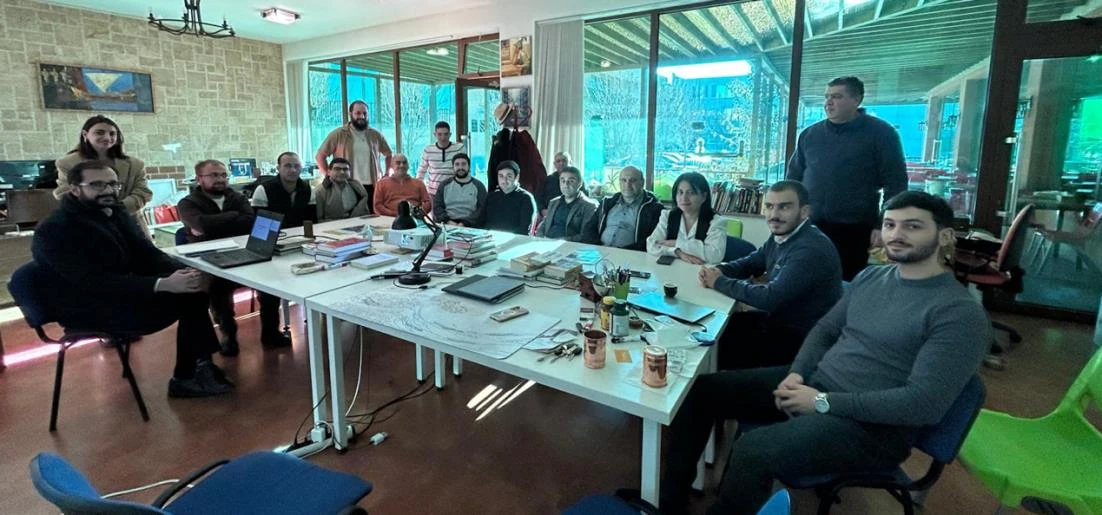
Pic.Bazovaya Kafedra Teachers’ Meeting
On Friday, February 20, we had a meeting of all the teachers at the Bazovaya Kafedra regarding the educational processes of the Talent Development System at the Engineering City.
During the meeting, a report (in presentation format) was presented, which included statistical data on educational programs and recorded successes. We also discussed existing problems and potential directions for improvement.
The main points of the discussions and the proposals presented are summarized below:
Lecturer Proposals
Curriculum Alignment: Ensure coordination between lecturers before the start of classes so that each instructor clearly understands the depth of their subject, the content of other subjects, and the material studied in previous years.
Assignments: Assign regular but feasible homework and small tasks to promote students' independent work.
Accountability: Develop accountability/penalty mechanisms for failure to complete assignments (e.g., making the submission of assignments a prerequisite for participating in the exam).
Phased Roadmap: Provide students with a clear and phased educational plan, outlining the sequence of study.
Resources: Present necessary literature and sources during the first classes.
Motivation: Discuss mechanisms for student motivation/incentives, especially regarding the balance between work and study.
Company Flexibility: Clarify the time flexibility provided to students by partner companies to ensure effective organization of studies.
Performance Analysis: Analyze the trends of declining student performance in recent years and identify the underlying causes.
LMS Implementation: Introduce a unified online platform (LMS) where lecturers can post educational materials and students can submit assignments.
AI Integration: Discuss the possibilities of applying Artificial Intelligence within the educational process.
Separately Discussed Topics
Mechanisms for increasing student discipline.
Ensuring a balanced workload for students.
Integration of LMS systems (such as Moodle, Canvas, or Google Classroom) with the TDS system.
Organizing feedback from lecturers.
Organizational challenges arising in the daily educational process for lecturers.
New methods of engineering education in the era of Artificial Intelligence.
Armenology
Armenian Equivalents to Foreign Words, 5
Հայոց լեզուն՝ ի տարբերություն, օրինակ, անգլերենի և ռուսերենի, հետևողական պայքար է մղում ինքնամաքրման՝ փորձելով յուրաքանչյուր օտար բառի դիմաց ստեղծել դրա համարժեք հայերեն տարբերակները։
Անի Մակինյան
Հայոց լեզվի և գրականության ամբիոնի ղեկավար «Շիրակացու ճեմարան»