The purpose of the Journal is to disseminate knowledge, experience, and best practice in engineering & manufacturing. The articles are written by practicing professionals in the Engineering City (EC) in Yerevan. They cover issues relevant to their projects, operations, and organizations. The articles address the challenges of the time. As such, the Journal is also a chronicle of the evolution of the EC, its companies, and its individuals. It is the aim of the Journal to advance the engineering & manufacturing practice, to enrich the engineering & manufacturing community, and to contribute to the worldwide discourse in engineering & manufacturing.
Published by the Engineering Association
The Engineering City JournalIssue 5/2026Published by the Engineering AssociationYerevan, March 10, 2026
“X in the Age of AI” is a call for action for everyone. This is because humankind is moving to a qualitatively newer stage of its evolution.
Replace “X” with anything that you are working on, and you get the call for action for you.
For example, this can be:
“Engineering in the Age of AI”, “Engineering Company in the Age of AI”, “Design, Development, and Test in the Age of AI”, “Products, Solutions, and Services in the Age of AI”, “Technologies and Planforms in the Age of AI”, “Research in the Age of AI”, “Sales & Marketing in the Age of AI”, “Managing in the Age of AI”, “School Education in the Age of AI”, “University Education in the Age of AI”, “Reading and Writing in the Age of AI”, “Parenting in the Age of AI”,
“Production in the Age of AI”, “Operations in the Age of AI”, “Sociology in the Age of AI”, “Governing in the Age of AI”, … And finally, “Armenia in the Age of AI”.
This is a call for everyone. Everyone must be thinking how his task or activity MUST be changed to be fully engaging AI. So as not to stay behind, so as not to stay on the previous S-curve when everyone else has been moving on.
It will be a matter of whether to stay around in this new stage or perish into the dust of insignificance. And the faster we move, the more competitive we will be.
Pic.The S-Curves of Technology.New Products Corner
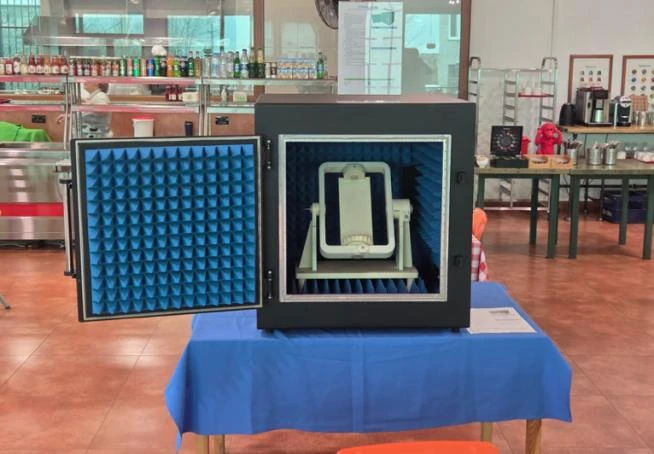
RF Diagnostic Chamber by YEA Engineering
Pic.The RF Diagnostic Center demonstrated in the EC Cafeteria
Overview of the Chamber
The interior is absorberThe YEAE RF Diagnostic Chamber provides a controlled, interference-free environment with shielding effectiveness of at least 90 dB across 1-5 GHz. A solid aluminum body with a lever-handle front door and defined stop delivers repeatable RF sealing-lined to minimize reflections.
Key Features
Benchtop form factor with front access for fast DUT insertion and cable routing.
Integrated manual polar positioner with azimuth and elevation rotation, angle indication, and locking.
Fixed internal measurement antenna geometry for repeatable coupling to the DUT.
Rear I/O backplane with shielded feedthrough connectors for clean integration.
Manual Polar Positioner
DUT size supports up to 250 x 100 x 50 mm.
Maximum DUT weight 300 g.
RF-volume parts made from RF-transparent materials to minimize influence on measurements.
Internal Antenna
Operating frequency range 1-5 GHz.
Configuration includes dual linear polarization (H/V) antennas and a circularly polarized antenna at the top.
Typical Applications
RF module validation and characterization
OTA coupling repeatability studies with controlled DUT orientation
Pre-compliance radiated emissions trend checks in the 1-5 GHz band
Lab debug and production bring-up in shielded conditions
Engineering Association
EA Annual Meeting
by Rama, Engineering Association
The Engineering Association (EA) conducted its annual meeting on March 3, 2026. The Board of the Association reported on the work accomplished along all major objectives.
I will provide a short summary of what has been presented for each objective.
Forming the Engineering Sector a. Number of engineering companies then and now (2007 – 2026) b. How the initial engineering companies were formed
Creating the Engineering Infrastructure a. The Engineering City – Phase 1 b. The Engineering City – Phase 2 c. Future Infrastructure Projects i. The Factory City ii. The Research & Education Central Building iii. The Corridor connecting the two ECs (Phase 1 & 2)
Acquiring Machinery and Equipment a. Manufacturing Machinery b. Equipment for the Advanced Research Labs (ARC)
Hardcore Capability Building a. ANEL b. Bazovaya Kafedra with the Polytechnic i. Measurement Devices & System Specialization (BSc) ii. RF Devices & Systems Specialization (BSc) c. Bazovaya Kafedra with the Academy of Sciences i. Aerospace Engineering Specialization (MSc) d. Diploma and Theses Projects e. Bagrevand 21 Program f. High School Program g. Middle School Program h. Preparing Young Teachers
Thought Leadership a. Advanced Research Center for Technology Research i. Smart Manufacturing Lab ii. Automotive/Aerospace/Semi Lab iii. Armenia Engineering Week iv. Friday Afternoon Lectures v. EC Journal
Developing the Engineering Community a. EC Meet-Ups b. EC Children Day c. EC Art Club d. EC Music Band
e. EC Chess Tournament f. Museum of Science & Technology g. Museum of Space h. EC Library i. EC Gallery j. EC Cafeteria k. Ground Zero Coffee Shop l. Outdoors Cinema
Servicing the Engineering Companies a. Preparing talent for the companies b. Job Placement Office c. Connecting Customers with EC Companies d. Connecting Companies with Spyurk Engineers
Engaging with the Government a. Member in the Armenian Investment Council b. Member in the Armenia Innovation Foundation c. Member in the R&D Qualification Committee d. Dilijan & Jermuk Workshops with the PM
Pic.Delegate to the EA Annual Meeting.
Bottom row, from left to right: Gagik Evoyan (HyLink), Bagrat Yengibaryan (EIF), Pogos Sepoyan (Engineering House), Vigen Hovhannisyan (YEAE), Araksya Khachatryan (EA), Vardan Aleksanyan (EA), Aram Khachatryan (EIF), Aram Salatian (EA). Top row, from left to right: Suren Eyramjyan (ATG), Gor Mkrtchyan (ISB), Arsen Arustamyan (NIY), Tigran Manukyan (YEAE), Marina Minasyan (EIF), Gevorg Arakelyan (YAE), Andranik Aghajanyan (PI). And Marina Saguinian (EA) was taking the picture.
Art & Engineering
Song dedicated to the World Engineering Day (March 4)
Lyrics by Suren Eyramjyan, ATG
Engineers
Sometimes they’re silent,
Sometimes they laugh, They wield their talent To ease the tough.
Life may seem unjust, They’re kept in shade, Yet through their practice, Progress is made.
We praise the artists, For what they’ve done, Writers and dreamers, Both living and gone.
But look to mechanics, To radio and space— Where engineers, like scientists, Drive human pace.
Knights of the shadows, With quiet fortitude, Let’s open the windows— Show them gratitude!
Brain cell connections change significantly when introducing new tools. This process is driven by neuroplasticity, the brain's ability to rewire, strengthen, or weaken connections between neurons in response to new experiences, learning,
and motor skill acquisition. When learning to use a new tool, the brain undergoes both structural and functional changes to adapt to the novel demands.
Pic.Brain Cell Wiring
So, when we used to do calculations in the mind, a certain cell networks would form, but when we moved wholeheartedly to using calculators, these connections got weaker as we stopped calculating in the mind. But other cell networks got created – those that are needed to operate a calculator. A smiliar move happened when we switched to using computers. A whole new brain cell networked were formed and the previous onces got weakened. And the same thing will happen again with the introduction of AI in our daily work.
The end result is that we can no longer do fast calculations in the mind, but we can now use calculators, and then computers, and now AI.
We could map this onto the S-Curves. Each S-curve forms a certain brain-cell network, which is dramaticall different than the former one. So, yes, we could say that we are getting dumber (if this is the correct scientific word) but only in the definition of the previous curve. We can extend this all the way to the man who was climbing trees in Saharan Africa. We have lost long ago that ability. So, compared to the S-curve of climbing trees we are much weaker than our ancestors, but much more advanced in terms of operating computers and engaging AI.
So, AI will rewire our brains. And we must learn what is this re-wiring and start this re-wiring process already in school years today.
Pic.The Brain stays the same, the number of cells remain the same,but the wiring of the cells change.
Here is another example – driving a car.
When we used to drive manual-gear cars we needed a certain skills (a certain wiring of the brain), then we switched to automatic-gear cars. Those who drive automatic cars today don’t know how drive manual-gear cars. So, in this respect, people got dumber (if this is the right scientific word) relative to the manual-gear curve, but are more advanced in terms
of progress as they can handle an automatic gear. Now with driver-less cars, the brain gets rewired again to handle all the other complexities that come with the driver-less cars.
Pic.The Brain stays the same, the number of cells remain the same,but the wiring of the cells change.
So, the measure of cleverness or dumbness should not be judged by the previous S-curves that have long been gone. Instead, we should concentrate on the current curve and what cell wiring is needed to handle the current curve.
Armenology
Armenian Equivalents to Foreign Words, 6
Հայոց լեզուն՝ ի տարբերություն, օրինակ, անգլերենի և ռուսերենի, հետևողական պայքար է մղում ինքնամաքրման՝ փորձելով յուրաքանչյուր օտար բառի դիմաց ստեղծել դրա համարժեք հայերեն տարբերակները։
Անի Մակինյան Հայոց լեզվի և գրականության ամբիոնի ղեկավար «Շիրակացու ճեմարան»